logo

A Mind @ Play

1001 Books To Read Before You Die

This is one the larger circulars out there, of a fairly arbitrary list of books to read. The source is a title of the same name that appeared in print, edited by Peter Boxall. It’s not a particularly bad selection, and with any such list it would be impossible to please everybody, but I think it is fair to say that the more recent decades were rather over-represented (in particular 70 books from the 2000s, despite the book only being published in 2006). However, the list does make a good starting point, and it’s nice to see Miss Rowling’s works were conspicuous only by their absence — just such a shame that the price to pay was that of excluding all children’s literature.

As for getting through the list, I doubt very much if I’ll even read 1001 books before I die, let alone fiction books, or the particular ones from this list. However, I have ticked off a few titles already, and no doubt as many of them coincide with titles on my reading list I’ll be able to whittle the list down a little further. Titles I’ve read to date are in bold.

Last update: 18th July 2024

30 minutes to read

Playing the Game

It’s about coming up to another one of those birthday events soon, the kind where you get together with a few close friends, have a meal, a few beers, perhaps watch a movie, before whiling away the rest of evening playing a board game. And as it’s in the UK, you only need a few guesses before you’ll stumble upon which game that will be.

Now I don’t claim to be any kind of expert in the field of board games, but that serious lack of diversity in most UK households makes most games evenings feel like you’re stuck in the same old rut again. Take a look at Wikipedia’s list of popular games, and you might see what I mean. Ignoring those that aren’t easily or commonly played in groups, there’s Cluedo, Monopoly, Risk, and Trivial Pursuit. And let’s face it, if a household has anything, it’s probably one of those. Of course, there’s plenty of fun to be had there, but to be honest there just isn’t enough variety in what’s usually available.

3 minutes to read

Return to Team Fortress

After playing Valve’s last flagship multiplayer game, Team Fortress 2, on and off over the past year, I’ve had some of my initial thoughts change since my post earlier this year. A raft of modifications, patches and packs have tweaked the game’s dynamics and bolstered its features such that the game now exudes a certain amount more polish than previously. My earlier speculation that Valve would not have the time (or eventually the inclination) to produce ‘service packs’ for that other classes in the game, after the length of time the original Medic pack took to be released, seems to have been disproved, with two further releases in the intervening period. These packs not only added achievements and unlockable weapons to two further classes, the Pyro and the Heavy, but also added extra game modes and maps.

I had originally written this post, long lingering in the limbo of the drafts bin, pointing out a number of weaknesses with the game as it stood. The most recent patch has done much to address those problems, and is a welcome and rather unexpected update, given Valve had denied there would be any releases for Team Fortress 2 until 2009 on account of the amount of work going into their latest release, Left 4 Dead . I’ve gone through and added some comments or changes where necessary, to reflect the recent update, though on the whole this post retains its original state.

13 minutes to read

Indiana Jones and the Kingdom of the Crystal Skull

The Indiana Jones saga was complete. He had trumped the Nazis, saved his father’s life, solved one of the greatest archaeological mysteries, and ridden off into the sunset with his companions. At least, until now. The recent spate of late-coming sequels and series restarts no doubt to a large extent prompted Indy’s return to the silver screen, and whilst this is no bad thing by itself, it does however spoil the rather nice ending to the previous series finale Indiana Jones & The Last Crusade . Although Sean Connery declined to come out of retirement for the film, the late Denholm Elliott sadly missed, and there being no part for John Rhys-Davies, the film’s still alluring combination of George Lucas, Steven Spielberg, John Williams and Harrison Ford will no doubt kick this film to the top of the box office. The problem is that the potential for disappointment runs almost as high as it did for Lucas’ own Star Wars Episode 1: The Phantom Menace, and one imagines that The Crystal Skull will only suffer as a result.
6 minutes to read

Assaulting the Team Fortress

Valve’s Team Fortress 2 is already over six months old, so now might seem like an odd time to write a post on the games merits, but with the recent release of the Medic Achievement pack, and the rather surprising (though not unwelcome) news that Valve intends to integrate some of its popular features and improvements into the ageing Day of Defeat: Source, I decided I’d jot down a few of my impressions.

The release of Team Fortress 2 came as something of a surprise, after so little news about its development, with virtually nothing concrete after the initial revelations in 1999. The finished version bears absolutely no relation to those initial screenshots, instead maintaining much stronger links to the original modification Team Fortress Classic, with a strong glossy coat of The Incredibles style graphics and an uncut, Columbian-strength injection of humour.

10 minutes to read

All Quiet on the Western Front

All Quiet on the Western Front
Remarque

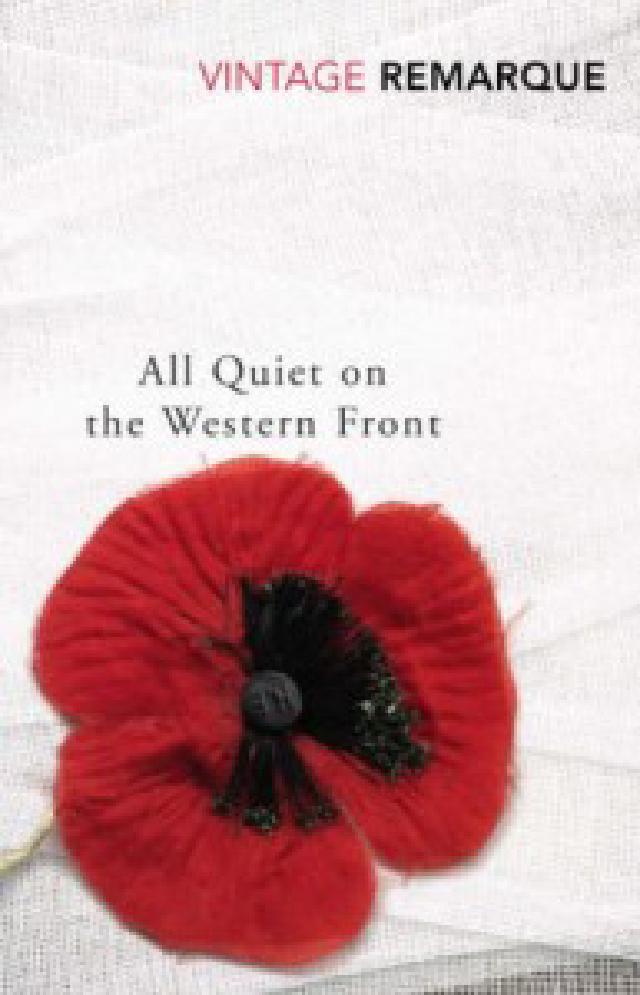
All Quiet on the Western Front is one of those classics more often referred to and talked about than read. It’s one of those books which doesn’t require reading to know the plot, and skimming through the book it almost feels like familiar territory. The book is eminently readable, and despite its brevity, deals with a wide variety of aspects of wartime life, both specific to the Great War and in general. Despite its age, the book has lost none of its meaning, and whilst it proves to be an important work historically, in dealing with everyday German experiences in the Great War and reactions to it during the Weimar years, it is also an enjoyable read and one that should certainly be read more often. It is a simple story told through the eyes of a lad only nineteen years old, pressured into signing up by a jingoistic schoolmaster, who is hardened, desensitised and churned up by the horrors of trench warfare in the Great War.

6 minutes to read

Conversations with Stalin

Ranković, Tito and Đilas

It’s probably about time I got around to finally writing about some of the books that I read, a little in the vein of the 52-in-52 meme. This probably won’t start a trend, but Milovan Đilas’ Conversations with Stalin is full of sufficient tidbits to make it worth writing about, albeit unfortunately a little on the short side.

Đilas (pictured, right) was one of the key figures in the Yugoslavian Partisan movement during the Second World War, and maintained an influential position in the post-war government alongside Josip Broz Tito (centre), Aleksandar Ranković (on the left), and Edvard Kardelj. He started to write his memoirs in the mid-50s and decided to set his encounters with Stalin aside for separate treatment, but his outspoken criticism of the Yugoslav system resulted in his arrest and imprisonment in 1956. He restarted this work in 1961, which eventually brought about his re-internment.

10 minutes to read

Katyń

Caught Andrzej Wajda’s Katyń this week as part of the Jameson Dublin International Film Festival and have to say I was fairly impressed. It will probably be the only film I’ll see since the prices go up at this time of year, and indeed I was quite lucky to catch this one since the first showing sold out with over a week to go, no doubt in large part due to the significant number of Polish people living in Dublin. Sadly, being sat right at the front didn’t give a particularly good vantage point for flicking between the pictures and the subtitles, and this is one film I’ll have to watch again on DVD before I can fully make up my mind, but the screenplay was well written and easy to follow despite the amalgam of different plotlines. Unfortunately, some of the character portrayals were rather wooden and to some extent detracted from the film’s message, if there is one beyond the plain Rankean historical analysis.
2 minutes to read

Domesticating Zebras

Noble—but undomesticable?

How do you domesticate a zebra? You can’t, or at least that’s the justification put forward by Jared Diamond in his Guns, Germs and Steel for why these wild beasts were never used as draught animals or cavalry in sub-Saharan Africa. Much of what Diamond writes has a logical ring to it, and whilst the evidence is sparse and in places contradictory, his conclusions fit the necessarily teleological approach. Others have accused him of too much geographical determinism, and perhaps they have a point, but the one thing which struck me as being peculiarly out of place in Diamond’s writing was his treatment of Africa’s wild animals as being unsuitable for domestication. He argued that it was only by chance that Eurasia benefited from having suitable species such as goats, sheep, cattle and horses, and that the native varieties of these animals in sub-Saharan Africa were inherintly unsuitable.

3 minutes to read

Company of Heroes Review

Company of Heroes

With some of the highest scores awarded for a real-time strategy, being one of the Top 20 Metacritic All-Time High Scores , Company of Heroes ended up being one of those games I had little excuse not to try out, given that my PC could (just about) run it. Admittedly I’m unable to comment on the graphical splendour which seems to have charmed so many gamers’ hearts, as every setting on my screen reads either ’low’ or ‘off’, but I’ve played a fair few strategy games over the years, and despite my early cynicism, Company of Heroes has warmed to me after a little experience on the online battlefields.

Whenever a game is released with a major historical theme, such as the ever popular World War II era, cries go up about the loss of realism to the gaming gods. Such and such would never happen, this and that never existed. Of course, many strategy games don’t even attempt to pander to the pedants of realism, and have been all the more successful for it (take the recent Supreme Commander, or any in the Command and Conquer series). Company of Heroes is no saint in this regard either, but its efforts to create a game at once realistic and fun have to be admired. There will always be players who complain about how developers could have stayed truer to real life, but Relic have done a good job in creating a game which at least seems realistic enough, and in ways which make the game fun to play. Shells fired at tanks have a chance of only glancing off the armour, and depending on the situation might even miss altogether; units under heavy fire become surpressed, limiting their movements and actions, or even pinned, leaving them helpless unless pulled out or relieved; and the variety of weapons and vehicles keep the tactics fresh and varied.

6 minutes to read