
Cryptonomicon

3 minutes to read
I should first of all declare: I am musically illiterate. Though I do enjoy listening to classical music and have on occasion been to a concert or two, my understanding of and ability to talk about the music itself is virtually non-existent.
Which is precisely why I picked up this book when it was on offer. Purporting to be “an accessible guide” and advertising itself as “the place to start” when wishing to learn a bit more about the symphonic form, this book seemed perfect for someone like me, who would be likely to listen in to the BBC Proms but very unlikely to turn up and get his hands on the programme. In the introduction, Nicholas Kenyon explains that this book was designed to provide the information prepared for the programme notes produced for the Proms to a much wider audience of music lovers.
GTA: Vice CityIt’s good to be back!
Last week I had one of those urges that only a pregnant man can have, to step back into the shoes of Tommy Vercetti and relive the delights of Vice City. This 2003 Rockstar outing was easily one of the best games I ever played, everything about it simply oozed style and polish. It’s almost as if the developers took a standard checklist of things that get rated in a game, made sure every area got given the works, and then spent the rest of their time filling in the gaps. Because it’s exactly that which nails it for this game, the attention to detail that makes playing Vice City like stepping into the ’80s: the clothes, the music, the cars, the giant mobile phones, heck, even the intro scene features the game being loaded on a Commodore 64 . Rockstar’s particular sense of humour is also here to see by the bucketload, from the tongue-in-cheek nature of some of the missions, through the fantastic dialogue and hilarious radio stations, to the small jabs and puns that little the streets of Vice City.
All of which is without even touching on the gameplay. Sitting firmly in the sandbox genre, Vice City gives you a wonderful feeling of being able to go about things your own way. Goofing around, stealing cars, running from the police, there’s plenty to do in the game when you aren’t really doing anything! But fortunately that doesn’t mean that Rockstar skimped out on the main storyline, which is by all means fantastic, and features all sorts of mission types, from starting riots, racing through the streets, to knocking off banks and delivering numerous methods of ‘persuasion’ to various denizens of the city. Aside from the main plot, there are plenty of other side missions and extras to discover, which add ample distraction to the standard mayhem generally meted out whilst driving between missions.
For whatever reason, Valve deemed last weekend to be worthy of celebration, and in addition to offering a welcome discount, offered a free trial for their action-packed zombie fest Left 4 Dead . Never one to pass up on such offers, and having a few friends who’d already bought the game, I spent a fair few hours last weekend testing the game out, enough so to have convinced me to actually buy the thing!
Whilst Left 4 Dead sits firmly in the survival horror genre, it is without a doubt a shooter through and through. Whilst the genre may have its early origins with games like Alone in the Dark , Left 4 Dead is to that what 28 Days Later is to Night of the Living Dead . It’s a high-energy bloodbath, which is well and truly the game’s essence. Forget setting, plot or character development, the game boils down to an assault course for four, through levels strewn with zombies to some method of escape, with occasional safe points along the way.
That might not sound particularly novel, but the game’s central tenet is its co-operative side. Whilst there are plenty of games past that have featured zombies in one way or another, none have quite provided the experiences associated with the stereotypical zombie genre. Left 4 Dead clearly owes a lot to the zombie movie, from the opening intro to the closing credit sequences, and the gaming world has been truly aching for such a game. Mods such as Zombie Panic! or Zombie Master filled a gap, but Left 4 Dead has made full use of the Source engine to create a movie experience built for four.
This isn’t meant to be a list of classic films. In fact, many classics would find it difficult to creep on to this list. These films don’t have to have bemusing screenplays, flawless acting, blood-pumping soundtracks, or brilliant cinematography. But they are all linked by that special je ne sais quoi which makes me able to watch them time and time again. That isn’t to say there aren’t plenty of great movies that share this rather dubious accolade. I could and would watch many of them again, but the experience is always be somewhat diminished from that initial viewing.
The films on this list, however, have something special that gives them enduring longevity. It’s not the film itself but the film experience that counts. With the intricacies of the plot laid bare, the twists, turns, shocks and surprises all blunted by experience, what’s left is whatever ethos the film can conjure up. Which is precisely what some cult classics manage so successfully. Umberto Eco once wrote that “Casablanca became a cult movie because it is not one movie. It is “movies”.” ((Umberto Eco, Travels in Hyperreality, (London, 1986), p. 208.)) His point was that the film itself wasn’t any particular gem, but it encapsulated what movie-goers expected to see. The lines were famous before they were spoken, perhaps the most famous line of all being the one that wasn’t even in it (“Play it again, Sam”). But films that are able to do that go on to be remembered long after they’re made, irrespective of their individual merits and the quality of their cinematography, acting or screenplay.
This is simply a list of films that qualify merely on account of springing to mind first when considering what makes a film rewatchable. They’re mostly quite mainstream, with a heavy slant on the action side, no doubt in part because drama is a singularly poor trait for repeat value. But they are foremost a very personal example, and I doubt whether others will share even a portion of their number.
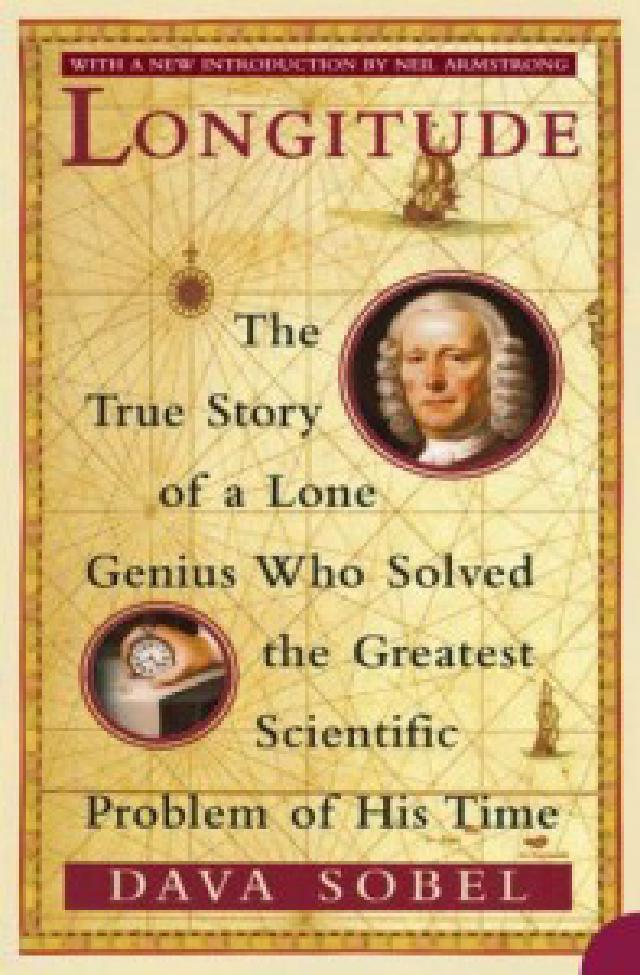
Longitude
In Phantoms in the Brain, V. S. Ramachandran has attempted to emulate the forebears he cites in the Preface, who inspired him to write science that is both informative and interesting to the general reading public. In this he has certainly succeeded, his style is highly approachable, and the content not only comprises interesting titbits, but wholly thought-provoking suggestions and analyses. I picked up Phantoms in the Brain on the basis of a recommendation from a friend more involved in the scientific fold than I am, yet found the book to be readily accessible to these with even only a meagre understanding of the way our brains function.
The book is for the most part concerned with the fundamental inner workings of the brain revealed to us through curiously specific medical conditions, often brought about by severe physical traumas such as strokes. Some of the findings are, perhaps, fairly well known by now, yet I’ve no doubt that many will still be quite shocking to most readers. However, Ramachandran keeps the presentation of both old and new findings fresh, in his natural inquisitive approach to each individual problem. His curiosity and novel attitude in dealing with many of these strange rarities of medical science at times remind one of the naïve questioning of a young child, who by approaching problems from altogether unexpected angles can come up with profound thoughts and solutions that would not normally strike an adult.

Power Grid is a simple, business game for two to six players, in which participants compete to buy power plants, the fuels to run them, and then build networks to sell their generated electricity over. In turn, the profits from electricity sales are used to build newer, improved plants, supplying more electricity, stockpile resources, earning greater profits, with a winner eventually determined on who supplies the most consumers.
The gaming elements are simple enough that the rule booklet, which is clearly written, can be read through and understood virtually in its entirety immediately before play. Each turn of the game runs through four phases. Firstly, power plants are bought at auction, each player proffering an available plant in turn, with the plant going to the highest bidder. Purchased plants are replaced from a visible ‘futures market’, allowing players to plan ahead with their bids. The second stage involves buying raw materials from the market. Each plant produces energy from one of five sources: coal, oil, garbage, nuclear or renewable. The latter plants require no raw materials at all and are oft hardest fought over at auction. The other fuels become increasingly expensive as supply dwindles, forcing players to either diversify their sources, or stockpile for future shortages. The third phase has players building an electricity network to supply power to their consumers. The network costs are based on proximity, and as players can only initially build in unoccupied cities, good initial placement can be a crucial factor. The final phase of the game is called the ‘bureaucracy’ phase, dealing with the supply of electricity (and thus generating profits), and various bits of setup to keep the game flowing.

