logo

A Mind @ Play

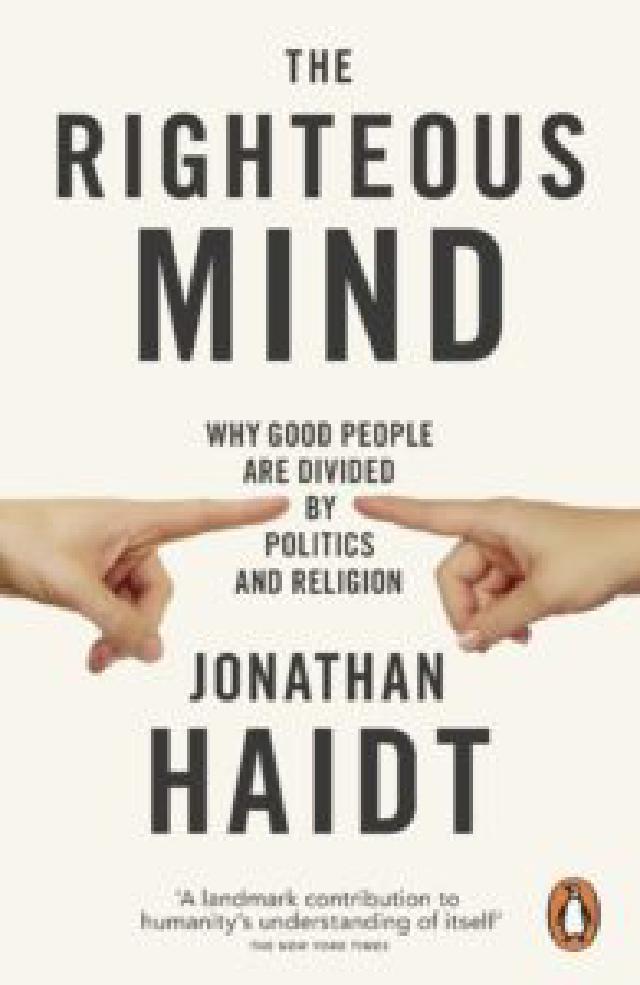
The Righteous Mind: Why Good People are Divided by Politics and Religion

Surveying today’s political landscape, it’s easy to suppose we’re approaching a precipice. Passionate intransigence divides societies into blocks which, even where decidedly secular, are rallied around with religious fetishism. It seems that ideological boundaries are increasingly hardening, poisoning the political dialogue, preventing constructive discourse and contributing to almost maddening levels of senseless blustering.

In The Righteous Mind, social psychologist Jonathan Haidt investigates the concept of morality and shows how differing political groups can reach such disparate conclusions from the same starting point. Gradually building up his argument, Haidt succinctly retreads a lot of territory covered elsewhere in more detail, but which is vital to understanding his standpoint.

3 minutes to read
Cybercrime and the DarkNet

Cybercrime and the DarkNet

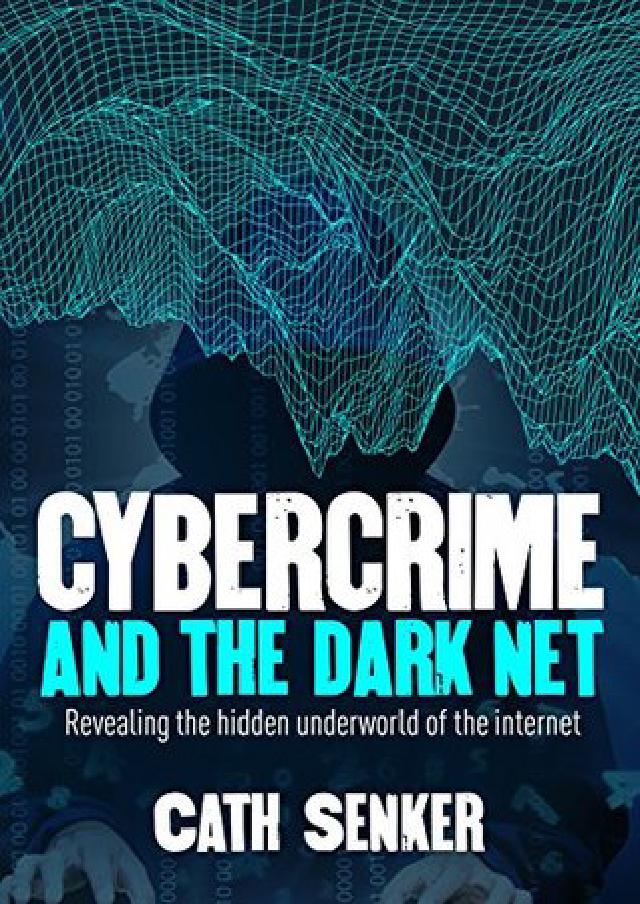
Cybercrime and the Dark Net by Cath Senker

As society tries to catch up with the overwhelming advancements in technology of the past few decades, it is unsurprising that governments and legislators find themselves plugging the gaps where criminality can flourish. Developments in encryption, obfuscation, distribution and anonymisation give criminals and privacy activists alike a broad toolkit for conducting their activities away from prying eyes. In Cybercrime and the Dark Net, Cath Senker offers a brief and easily digested overview of this bewildering digital landscape. The book is essentially a collection of short vignettes covering a wide variety of different forms of cybercrime, with an essentially separate second section surveying the dark net.

4 minutes to read
The Man Who Mistook His Wife’s Head for a Hat

The Man Who Mistook His Wife’s Head for a Hat

What happens when we are no longer able to recognise objects, but there’s nothing wrong with our ability to see? When we lose our sense of self and no longer feel the body we’re in? When the concept of ‘leftness’ is severed from our reality?

Oliver Sacks describes cases involving all these issues and more in a classic survey of ‘losses’ and ‘excesses’ in the human brain. The patients are a fascinating array of characters each suffering from such unusual problems that the symptoms seem almost comical. The eponymous man who failed to identify his wife’s head suffered from a form of visual agnosia , leaving him incapable of identifying objects, although his visual acuity was not impaired. Another sufferer had lost all ability to form new memories, and indeed was stuck at some point in his past, incapable of progressing past that point.

2 minutes to read
How Not to Be Wrong: The Power of Mathematical Thinking

How Not to Be Wrong: The Power of Mathematical Thinking

Maths is a powerful tool, but in the wrong hands it can be pointless at best, dangerous at worst. Unfortunately, most human beings are a wrong pair of hands. We weren’t designed for handling numbers of any complexity, and tend to be out of our depths once they go beyond single digits. But a basic knowledge of numbers makes us overconfident and keen to interpret figures and statistics we don’t really understand as if they were cold hard facts. You only need to watch someone trying to work out which packet of washing powder presents the better deal when the supermarkets add a few percentages to the labels, or our reactions to opinion polls or the latest cancer-scare headlines.
3 minutes to read
Wesley: The Story of a Remarkable Owl

Wesley: The Story of a Remarkable Owl

Doubtless recommended to me because I enjoyed Are We Smart Enough to Know How Smart Animals Are? by Frans de Waal, this story was at first somewhat disappointing in the sense that it is to a greater extent a personal memoir rather than an investigation of animal intelligence. I had been expecting a heavier, more science-laden account of their relationship, but once I’d adjusted to the style and tone of the book, I found plenty here to enjoy.
One minute to read
Freedom Next Time

Freedom Next Time

What you need to know about humans is that they are dicks. And if you give them any power their dickness prevails over everything else.

That beautifully succinct phrase comes from a review  on Good Reads and is an understandable frame of mind to find yourself in after reading this book. Reading it ten years after publication, it’s almost surreal how little has changed in the intervening period, how the wheels of progress continue to grind on the gears of conservatism. In Freedom Next Time John Pilger surveys the state of peoples suffering under the weight of ignorance, ill-will, apathy and condescension in various theatres of the world, turning the spotlight in turn on Palestine, India, Afghanistan, South Africa and the Chagos Islands.

4 minutes to read
Star Wars VIII: The Last Jedi

Star Wars VIII: The Last Jedi

I’m clearly getting too old for blockbusters. Seriously, I walk out the cinema wondering what it was the scriptwriters wanted to show me in their cobbled together action flick, and search in vain among the sea of beaming faces for someone who shares my lack of enthusiasm. ‘It was entertaining,’ is what most of them defensively tell me, usually suffixed with ‘but I’m not a Star Wars fan,’ presumably when I don’t respond the same way, as if fearing I’ll proceed to bombard them under a geeky tirade of lore and canon.
7 minutes to read
The Blind Watchmaker

The Blind Watchmaker

Blind Watchmaker
What is it about the theory of evolution which makes it so difficult to comprehend? Why does it require a leap of faith for many people to understand? And why do they feel they need to believe in evolution in a way they never would with, say, gravity?

Having finally got around to reading The Blind Watchmaker this year, one remark really stuck in my mind, when Dawkins turned to describing the human experience in terms of units. The way we perceive the world around us is intrinsically bound to the way we encounter it. We consider time, for instance, within a fairly specific range. Once we go beyond that range, our natural, indeed evolutionary faculties are incapable of perceiving the world outside those bounds with any degree of accuracy. That’s not to say we hit a brick wall when we step beyond that range. We’re still perfectly capable of contemplating the meaning of extremely long or short timescales, for example. We can measure them, compare them, calculate them; we can analogise and use metaphors. But we are far from being able to really grok what they mean.

4 minutes to read