logo

A Mind @ Play

Is That a Fish in Your Ear?: Translation and the Meaning of Everything

In titling his book (or having his book titled?) “Is that a fish in your ear?”, David Bellos has certainly made categorising this work a difficult task. It looks and feels like it should belong firmly in the ‘popular science’ section, yet as other reviewers have pointed out, the writing sits it firmly in a half-way academic category. Still, the material covered should be of interest to a wide range of readers, with the book split into fairly short and relatively self-contained chapters, that one can really dip and choose or skip out the parts that are of little interest. The book covers a very wide range of topics, and skitters over numerous areas such as philosophy, biology, religion and of course linguistics.

4 minutes to read

The Shallows: What the Internet Is Doing to Our Brains

This post is also available in English .

Der Klappentext behauptet, dieses Buch sei „Der stumme Frühling“ des literarischen Geistes. Zwar vergleicht man hier Äpfel mit Birnen, aber im Kern gibt es in diesem Buch eine provozierende Erörterung der Auswirkung verschiedener Techniken auf die Funktionsweise des Geistes. Carrs Hauptthese, die er in seinem Artikel „Is Google making us stupid?“ schon ausführlich erklärt, ist, dass das Internet Veränderungen in unseren Hirnen auslöst, die unsere Denk- und Erinnerungsvermögen nicht unbedingt positiv verändern. Grundsätzlich spielt das Internet die Rolle eines Universums der Ablenkung, das eine unendliche Vielfalt an leichter Unterhaltung und sinnlosen Unterbrechungen einführt, wodurch wir unsere Gehirne nach einem süchtig-machenden Muster von ineffektivem Multitasking trainieren. Wir heben die neue Technik auf ein Podest, als Eingang zu einer neuen Welt des Wissens und der Kommunikation, die viele Vorteile im Rahmen von sozialer Wechselwirkung, persönlicher Freiheit und wissenschaftlicher Bemühung mit sich bringt. Carr ist jedoch der Meinung, dieses Portal sei beileibe nicht ohne Nachteile, dass diese Technik unsere Fähigkeit des tiefen Denkens und das effektive Nutzen des Gedächtnisses beeinträchtigt.

3 minutes to read

The Shallows: What the Internet Is Doing to Our Brains

The blurb claims this book to be a “Silent Spring” for the literary mind. That is certainly comparing apples to oranges, but at the core to this book there is a thought-provoking argument about the impact of various technologies on the workings of the mind. Carr’s main thesis (to be found almost in its entirety in his article “Is Google making us stupid?”) is that the Internet is changing our minds, our ability to think and the way we use our memories, and all this not necessarily for the better. Essentially, the Internet is a universe of distractions, offering endless light entertainments and pointless interruptions that train our brains into an addictive shallow pattern of ineffectual multitasking. We hold up the new technology on a pedestal as a doorway to a new world of knowledge and communication, bringing with it benefits for social interaction, personal liberty and scientific endeavour, but Carr claims that this portal is not without its drawbacks vitiating our ability to think deeply, or use our memories effectively.

3 minutes to read

Cryptonomicon

This is a book with much promise. Neal Stephenson is a very decent writer; his prose can be both engaging and exciting, without pandering to the reader in the way many techno-thriller authors choose. Unfortunately, this is also a book that seems to have been written in an ecstasy of authorship, without enough time and consideration given to making the book a reader’s choice. My copy weighed in at over 1100 pages, which is a very long expanse for Stephenson to ultimately say very little.
3 minutes to read

The BBC Proms Pocket Guide to Great Symphonies

I should first of all declare: I am musically illiterate. Though I do enjoy listening to classical music and have on occasion been to a concert or two, my understanding of and ability to talk about the music itself is virtually non-existent.

Which is precisely why I picked up this book when it was on offer. Purporting to be “an accessible guide” and advertising itself as “the place to start” when wishing to learn a bit more about the symphonic form, this book seemed perfect for someone like me, who would be likely to listen in to the BBC Proms but very unlikely to turn up and get his hands on the programme. In the introduction, Nicholas Kenyon explains that this book was designed to provide the information prepared for the programme notes produced for the Proms to a much wider audience of music lovers.

4 minutes to read

We the Living

I’ve given up, and I’m not afraid. Only there’s something I would like to understand. And I don’t think anyone can explain it. You see, I know it’s the end for me. I know it, but I can’t quite believe it, I can’t feel it. It’s so strange. There’s your life. You begin it, feeling that it’s something so precious and rare, so beautiful that it’s like a sacred treasure. Now it’s over, and it doesn’t make any difference to anyone, and it isn’t that they are indifferent, it’s just that they don’t know, they don’t know what it means, that treasure of mine, and there’s something about it that they should understand. I don’t understand it myself, but that’s something that should be understood by all of us. Only what is it, Kira? What?

One minute to read

Wo blieben wir alle?

Meine Gedichte brauche ich dazu nicht mehr; in meinen Bücherregalen ist das alles viel besser gesagt. Aber was würde mit einem passieren, wenn das schon ein Grund wäre, etwas aufzugeben? Wo blieben wir alle? So schreibe ich weiter, doch oft genug erscheint es mir grau und papieren gegen den Abendhimmel, der jetzt über den Dächern weit und apfelfarben wird, während der violette Aschenregen der Dämmerung schon die Straße füllt.

Erich Maria Remarque, Der schwarze Obelisk

One minute to read

The Paper mp3

Reading this post recently, I found myself asking why ebooks haven’t really taken off as a medium. Certainly more recent efforts, such as Amazon’s Kindle, have helped to reignite the market after a rather dubious development period over the past decade or so, but if one compares the ubiquity of mobile phones or digital audio players, e-books are entirely missing from the landscape. ((According to The Guardian in April 2008, ebooks accounted for less than 1% of the total publishing market, albeit this share has no doubt increased since.))

In purely utilitarian terms, should the technology ever be fully and appropriately used, ebooks have a lot to offer over their paper counterparts. There are far fewer requirements and resources needed for production, and distribution is much easier. Whilst a device on which to read ebooks might outweigh a single volume, additional books add nothing, and in terms of transporting books en mass, ebooks are clearly in favour. The ability to flick through a paper volume might be lost in the electronic form, but this is clearly compensated for by vastly improved tools for search and cross-referencing. Likewise combining other forms of media such as video and audio is a perfectly reasonable conception with ebooks, that the paper variety can’t really compete with on any level. They’re also more easily manipulable, in terms of being able to zoom, highlight or simple leave your own annotations about the place. All of which is to say nothing of the potential advantages for newspapers and other periodicals.

4 minutes to read

Recent Reads

It’s fairly rare for me to bother reviewing anything I read on here, however since I had some spare minutes and some actual opinions on some of the books I read this last month, there seemed to be enough to say to make up at least a short post. In fact it turned out to be a bit on the long side, so scroll down the relevant review if you’re really interested—being Stephen Fry’s strange debut The Liar , J.M. Coetzee’s rather aggravating Slow Man , Isabel Allende’s book for children City of Beasts , Zadie Smith’s impressive opener White Teeth and Murray Walker’s charming little autobiography Unless I’m Very Much Mistaken .
15 minutes to read

Longitude

Longitude

Longitude

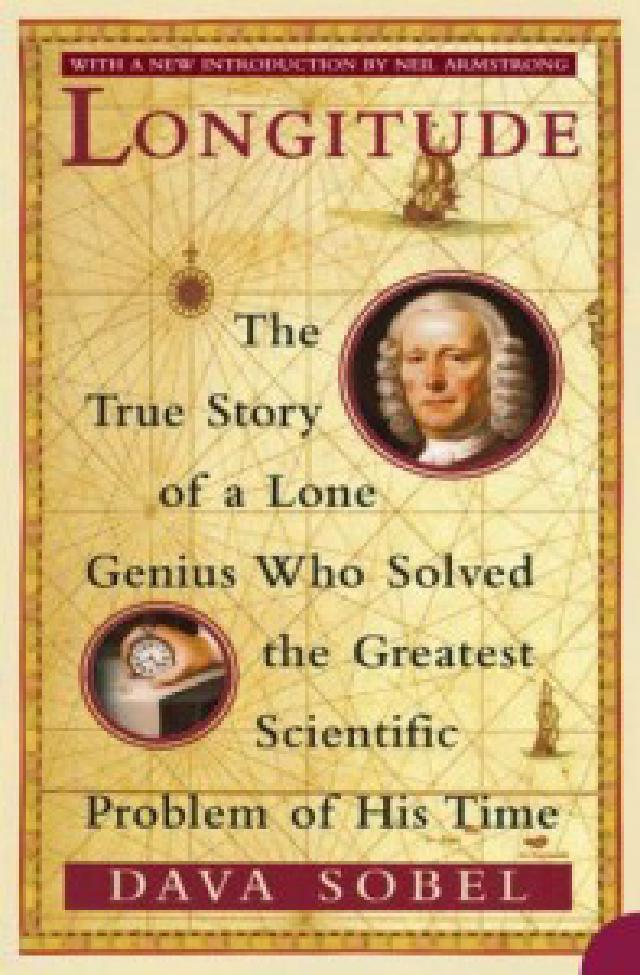
Longitude is a short tale of an individual from an indistinct background and minimal education, striving to solve one of the most difficult conundrums of his day, through patience, diligence and a monumental attention to detail, combined with the exertions of half a century of labour. The story has plot twists and setbacks, rivals and allies, and if one wishes to stretch the imagination a little, even a villain. And of course, it’s all true.
2 minutes to read